
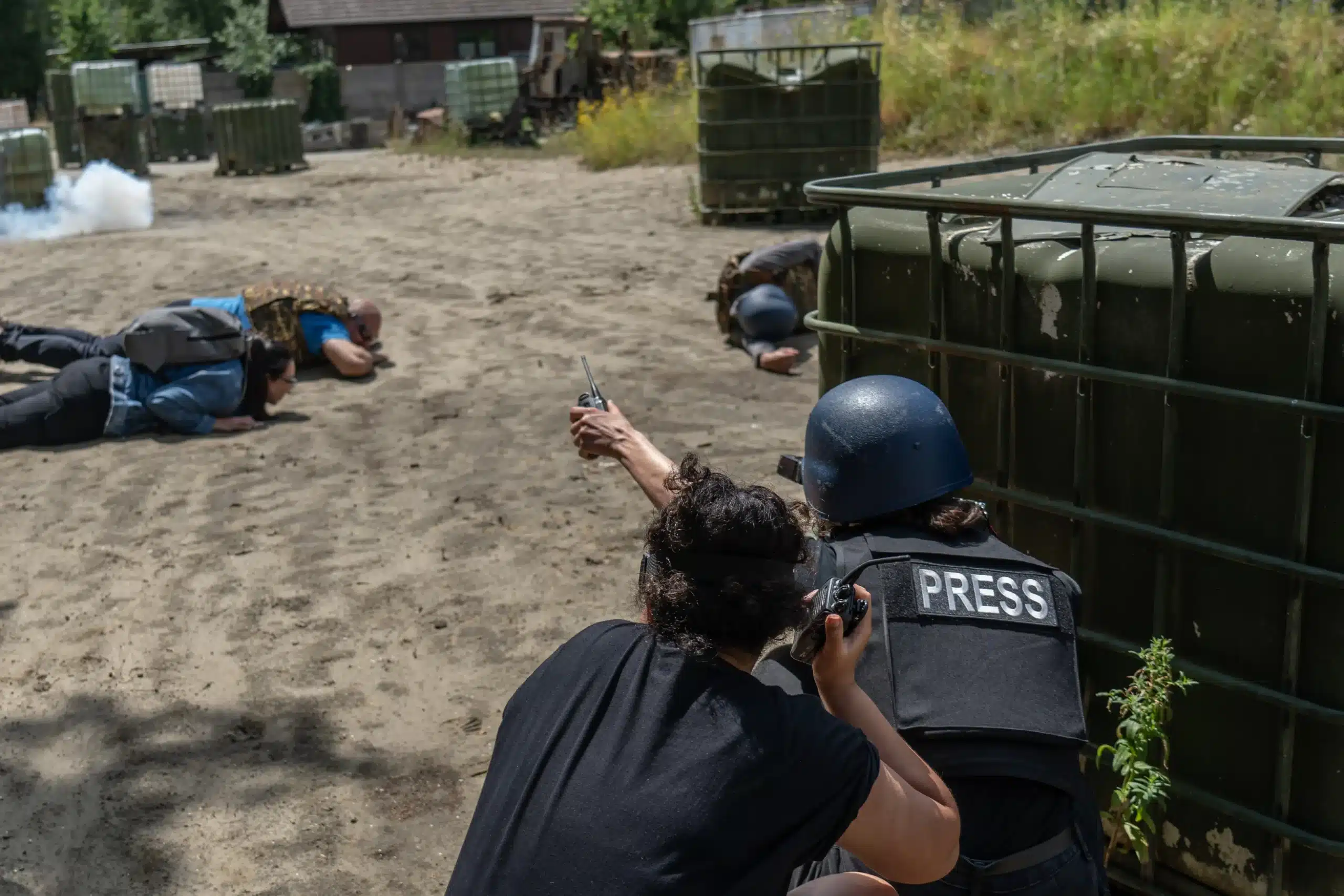
In today’s unpredictable world, operating safely in high-risk environments is essential. Hostile Environment Awareness Training (HEAT) provides individuals and organisations with the tools to identify, avoid, and respond to threats in conflict zones, unstable regions, or areas prone to civil unrest. This guide covers everything: what HEAT training is, who needs it, what it includes, and why it’s indispensable for anyone working or travelling in dangerous locations.
What is HEAT Training?
HEAT training is a specialised program designed to prepare people for potentially dangerous situations. It combines practical exercises, scenario-based learning, and theoretical knowledge to help participants develop situational awareness, safety skills, and crisis management capabilities.
Unlike basic safety courses, HEAT training focuses on environments where violence, civil disorder, and unpredictable threats are common, making it essential for journalists, aid workers, security professionals, and corporate personnel working internationally.
Why HEAT Training is Essential
Operating in high-risk areas without proper preparation can have serious consequences. HEAT training helps individuals:
-
Recognise potential threats before they escalate.
-
Respond effectively under pressure in emergency situations.
-
Provide basic medical and trauma care if help is not immediately available.
-
Maintain personal and team safety, ensuring projects or missions can continue without disruption.
-
Meet organisational duty-of-care obligations for staff deployed abroad.
Who Should Take HEAT Training?
The training is valuable for anyone entering environments where safety cannot be guaranteed. Key participants include:
-
Journalists and media crews reporting from conflict zones.
-
NGO and humanitarian workers operating in disaster or conflict areas.
-
Corporate staff travelling to countries with political instability.
-
Security professionals and risk management personnel.
-
Government officials or diplomats stationed in volatile regions.
-
Independent travellers or researchers in high-risk areas.
Core Components of HEAT Training
Most HEAT courses include a combination of theory and hands-on practice:
-
Situational Awareness – Spotting threats, understanding environments, and proactive risk management.
-
Personal Security & Conflict Avoidance – De-escalation techniques and strategies to avoid confrontation.
-
Kidnap & Hostage Survival – Mental preparation and response strategies for abduction scenarios.
-
First Aid & Trauma Response – Emergency medical care and life-saving techniques.
-
Navigation & Travel Safety – Planning safe routes, vehicle security, and checkpoint procedures.
-
Crisis Response & Evacuation – Emergency procedures and coordinated evacuation strategies.
Hands-on simulations and realistic exercises ensure participants can apply their knowledge under pressure, building confidence in real-life situations.
How the Training is Delivered
The training typically spans 3–7 days and combines:
-
Classroom instruction for theory and best practices.
-
Practical exercises simulating real-world threats.
-
Scenario-based drills to test responses under stress.
-
Group discussions and debriefs to reinforce learning.
Some providers also offer online HEAT training, providing flexible learning options while maintaining interactive scenario-based content.
Certification and Validity
After completing a HEAT course, participants usually receive a certificate valid for 2–3 years. This certification demonstrates preparedness for high-risk assignments and is widely recognised by organisations operating internationally.
Benefits for Organisations
For employers, HEAT training ensures:
-
Staff safety and wellbeing.
-
Compliance with legal duty-of-care obligations.
-
Reduced operational disruptions in high-risk zones.
-
Improved team confidence and resilience.
-
A strategic advantage in planning and executing international operations.
How to Choose the Right HEAT Course
Consider these factors when selecting a HEAT provider:
-
Accreditation and recognition of the course.
-
Instructor experience, preferably with military or security backgrounds.
-
Quality and realism of scenario exercises.
-
Course duration and location convenience.
-
Availability of post-training support and refresher options.
Always review provider credentials and seek recommendations from organisations with experience in high-risk deployments.
HEAT Training FAQs
Q: Is HEAT training mandatory?
A: While not legally required, many employers mandate HEAT training for personnel deployed to conflict or unstable regions.
Q: How long is a HEAT course?
A: Most courses last between 3–7 days, depending on the depth and type of training.
Q: Can civilians take HEAT training?
A: Yes, journalists, aid workers, researchers, and independent travellers can enrol in most HEAT courses.
Conclusion
Hostile Environment Awareness Training equips individuals with the knowledge, skills, and confidence to navigate dangerous situations safely. From personal safety to crisis response, HEAT training is an essential investment for anyone operating in high-risk environments. Prepare yourself, protect your team, and stay safe — HEAT training ensures you are ready for the challenges ahead.
