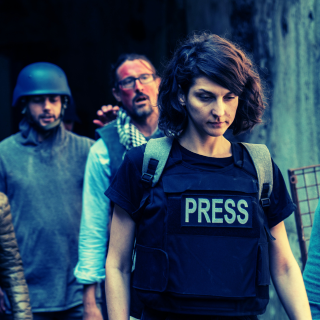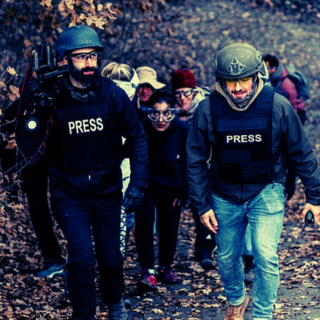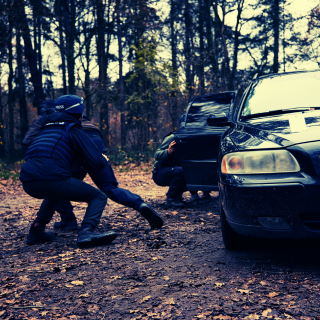
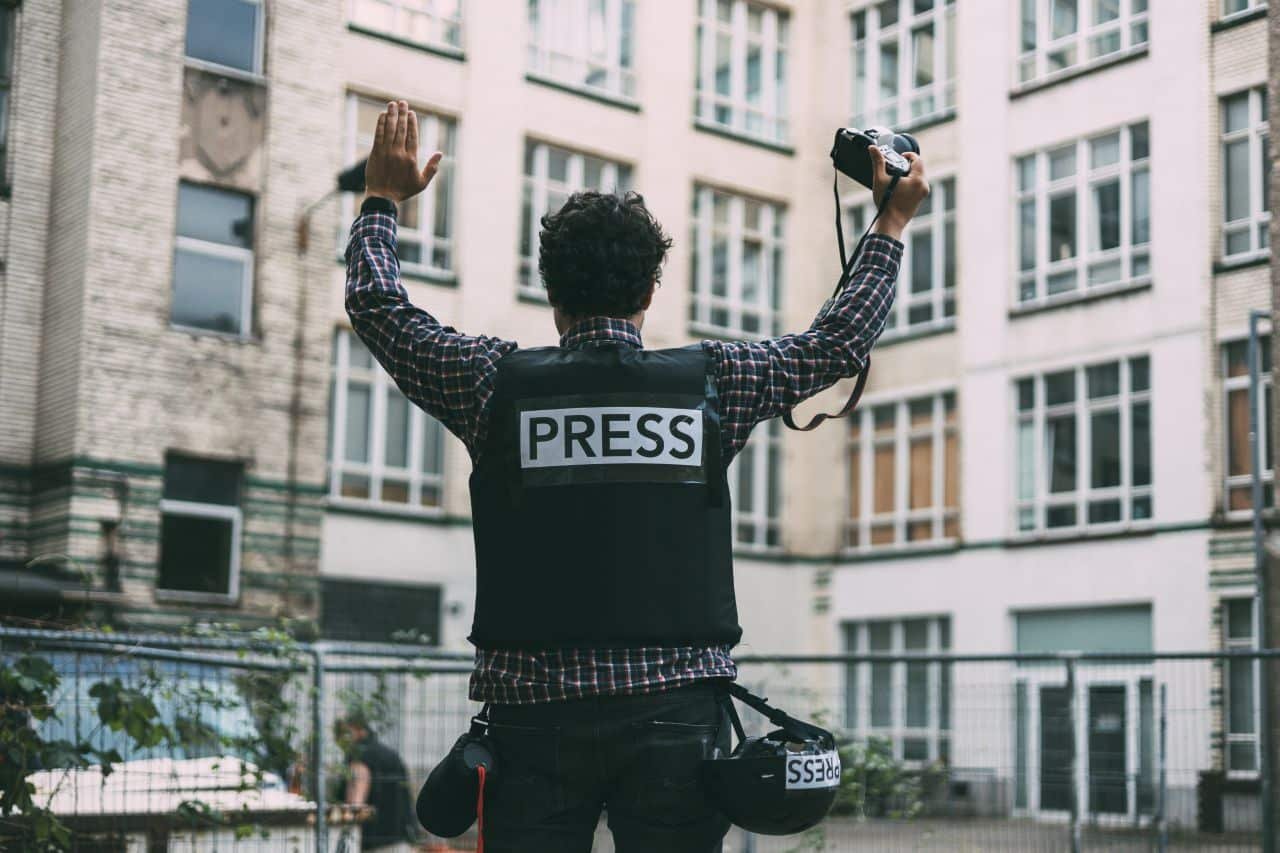
The safety of journalists in conflict zones has become a critical global concern as the security climate for media professionals rapidly deteriorates. In modern hotspots like Ukraine, Gaza, and Yemen, journalists, photojournalists, and war correspondents now face unprecedented physical and digital risks that bypass traditional protections. According to the International Federation of Journalists (IFJ), 2025 was one of the deadliest years on record, with 128 journalists killed worldwide. This surge in violence underscores a chilling reality: simply wearing a “PRESS” vest is no longer a guarantee of survival in today’s high-risk environments.
To ensure the safety of journalists in conflict zones, it is no longer enough to rely on a “PRESS” vest. Media workers are now facing targeted technological threats and a surge in arbitrary detentions.
Ukraine: The Lethal Rise of Drone Warfare
The safety of journalists in conflict zones has been fundamentally altered by the use of First-Person View (FPV) drones. The death of French photojournalist Antoni Lallican and the severe injury of Heorhiy Ivanchenko in October 2025 underscore this shift. Despite wearing protective “PRESS” gear, they were targeted by a Russian FPV strike near Druzhkivka.
Unlike traditional artillery, FPV drones allow for precise, individual targeting far beyond the frontlines. This technology means that “safe zones” for media are disappearing, requiring new situational awareness protocols.
Gaza: High-Intensity Bombardments and Infrastructure Loss
In Gaza, the primary threat to the safety of journalists in conflict zones remains large-scale airstrikes and urban bombardment. Since the conflict began in 2023, the mortality rate for media workers has been tragically high, with over 186 deaths recorded.
-
The Risk: Bombings of hospitals and media hubs (like the Nasser Hospital strike in August 2025) destroy the very infrastructure journalists rely on for safety.
-
The Solution: Rapid evacuation skills and “Hostile Environment Awareness Training” (HEAT) have become the gold standard for survival in these high-intensity environments.
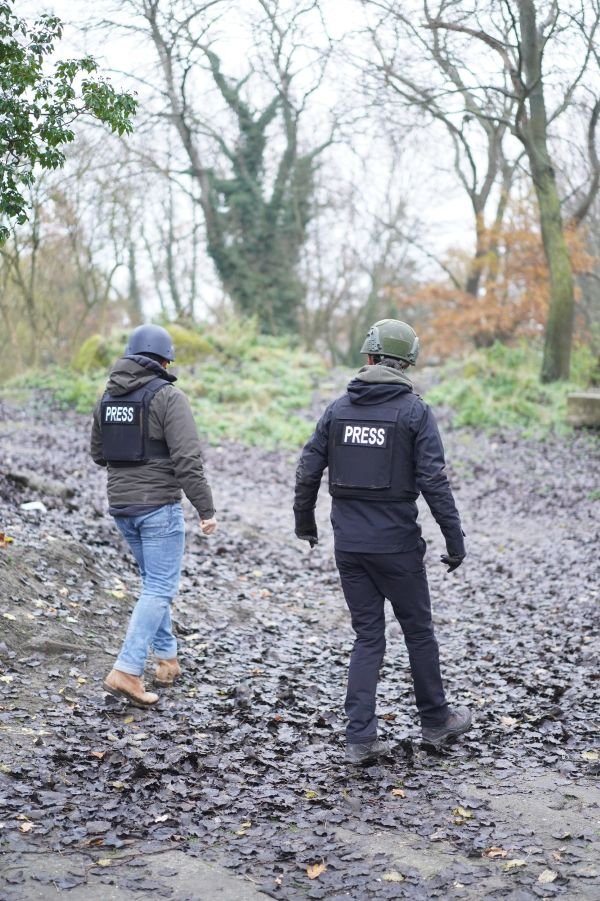
Comparing Regional Threats: Ukraine vs. Gaza
The safety of journalists in conflict zones depends on adapting to localized warfare tactics. In Ukraine, the primary danger has shifted toward precision-guided FPV drones that can track and target individual media vehicles far from the frontlines. Conversely, the safety of journalists in conflict zones like Gaza is most often compromised by high-intensity aerial bombardments and urban shelling. These distinct environments require different survival strategies, from electronic warfare awareness in Eastern Europe to rapid evacuation protocols in the Middle East.
The Rising Risk of Detentions and Kidnappings
Beyond the immediate physical dangers of strikes, the safety of journalists in conflict zones is increasingly undermined by the threat of arbitrary detention. Across hotspots like Yemen, Ethiopia, and Somalia, media professionals face a surge in abductions by both state and non-state actors. Ensuring the safety of journalists in conflict zones now requires specialized training in crisis negotiation and legal rights, as these “silent” threats can be just as lethal to a reporter’s career and well-being as active combat.

Protecting the Truth through Modern Training
Ultimately, prioritizing the safety of journalists in conflict zones is the only way to ensure the global press remains functional. Physical injuries and psychological trauma from kidnappings disrupt critical reporting, leaving the world in the dark about unfolding crises. By investing in comprehensive HEAT training, organizations can address the evolving safety of journalists in conflict zones, ensuring that those documenting history survive to tell it. Without these protections, the truth itself becomes a casualty of war.
Source: Committee To Protect Journalists