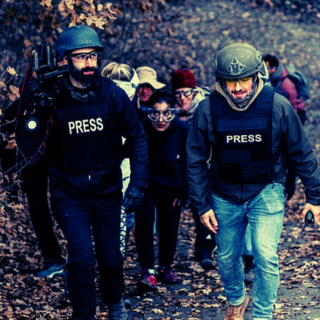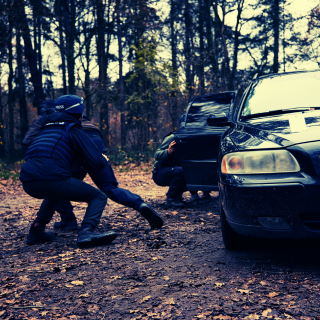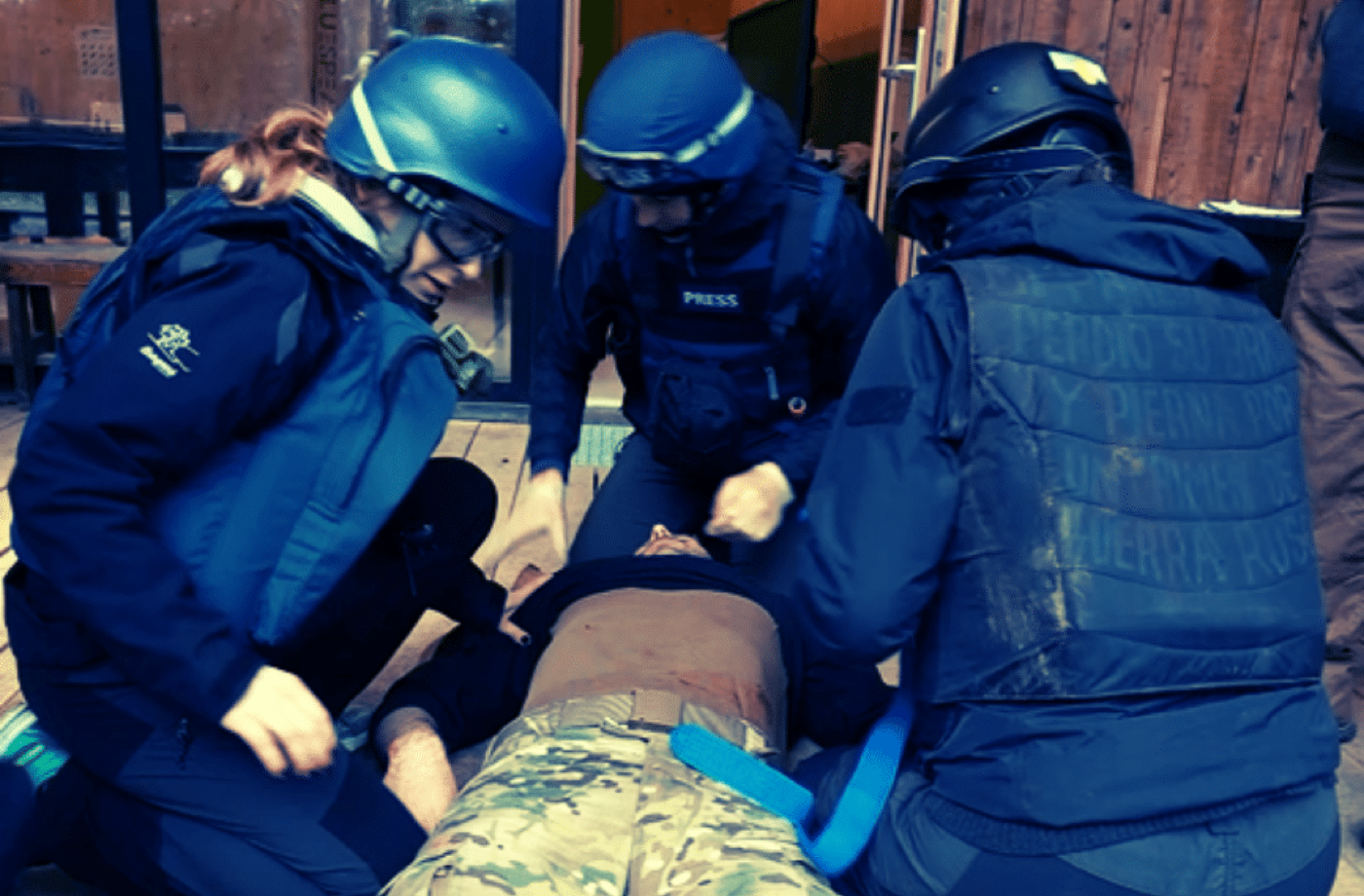
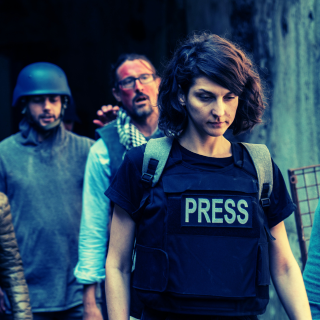
A checkpoint changes tone in seconds. A crowd that looked noisy but manageable starts moving with intent. A routine drive develops small signs that something is off. In high-risk environments, those moments rarely announce themselves clearly. Hostile environment situational awareness course is designed to help professionals recognize weak signals early, assess what matters, and act before uncertainty becomes a crisis. This is why hostile environment situational awareness is now considered a core operational skill.
For journalists, aid workers, NGO staff, diplomatic teams, and corporate personnel traveling into unstable settings, situational awareness is not a soft skill. It is a core operational capability. It affects route planning, accommodation choices, movement discipline, interview setups, protest response, and how quickly someone notices that normal patterns have changed. It affects route planning, accommodation choices, movement discipline, interview setups, protest response, and how quickly someone notices that normal patterns have changed. This is why hostile environment situational awareness is now considered a core operational skill. When training is done properly, it does more than teach people to ‘stay alert.’
What a Hostile Environment Situational Awareness Course Should Actually Teach
The term gets used loosely, which can be a problem. Many people assume situational awareness means simply paying more attention. That is too vague to be useful in the field. Good training teaches participants how to observe without becoming distracted, how to identify indicators of escalation, and how to interpret a situation in context rather than in isolation.
That distinction matters. A loud argument on a street corner may be irrelevant in one setting and a precursor to wider disorder in another. A vehicle parked in an unusual place might mean nothing, or it might deserve immediate reassessment depending on location, timing, and local threat patterns. Situational awareness is not about suspicion for its own sake. It is about disciplined pattern recognition.
A credible course should also address the limits of perception. Under stress, people narrow their focus. They miss exits, overlook secondary threats, and become fixed on the most obvious problem in front of them. Training should show how stress, fatigue, time pressure, and cognitive bias degrade judgment. That makes the learning practical. It shifts the conversation from theory to behavior.
Why Journalists and Aid Workers Need More Than Common Sense
Experienced field staff often rely on instinct, and that instinct can be valuable. But instinct built on limited exposure is not enough for hostile or politically unstable environments. Common sense tends to work best in familiar places, where social cues and patterns are known. In unfamiliar settings, the same assumptions can create blind spots. For aid workers specifically, hostile environment awareness training provides the structured method that instinct alone cannot replace.”
That is one reason employers and institutions increasingly look for formal hostile environment situational awareness preparation gives people a repeatable method.. A structured hostile environment situational awareness course gives people a repeatable method.. It improves how they scan an environment, how they brief movement plans, how they spot pre-incident indicators, and how they communicate concerns within a team. It also supports duty-of-care obligations. Organizations are expected to do more than issue travel guidance and hope staff will figure it out.
There is also a confidence issue. Untrained personnel often swing between two extremes. They either underestimate risk because nothing has happened yet, or they become so hypervigilant that every unfamiliar detail feels like a threat. Neither response is effective. Training helps people calibrate their attention so they can stay functional and make proportionate decisions.
The Best Courses Are Scenario-Based, Not Classroom-Heavy
A strong situational awareness training course should not stop at slides, definitions, and checklists. The real test is whether participants can apply the concepts when pressure increases, information is incomplete, and events start moving quickly.
That is why scenario-based training matters. When people work through realistic incidents, they begin to understand how awareness changes over time. A quiet approach to a meeting location can become a mobility problem if demonstrations block key routes. A casual interaction can become threatening if bystanders, body language, and movement patterns shift. A routine hotel stay can turn into a security concern when access control breaks down.
Scenarios also expose habits that people do not notice in themselves. Some move too fast and commit to bad decisions early. Others hesitate, waiting for certainty they will never get. Good instruction identifies those tendencies and corrects them before deployment.
For high-risk professionals, realism matters. Training should reflect actual field conditions, including ambiguity, fatigue, noise, conflicting priorities, and the need to balance mission objectives with personal safety. That does not mean manufactured drama. It means practical exercises built around how incidents unfold in real life. This is why stress inoculation training is a key component of any serious hostile environment programme.
What to Look for in Course Content
When evaluating hostile environment situational awareness course content, not every course labeled hostile environment situational awareness will meet operational needs.. For travelers heading into elevated-risk environments, the subject works best as part of a broader hostile environment framework. Every element of hostile environment situational awareness connects to practical field decisions.
At a minimum, course content should cover observation techniques, risk indicators, movement planning, behavioral analysis, crowd dynamics, and immediate decision-making under stress. Every element of hostile environment situational awareness connects to practical field decisions. It should also connect situational awareness to related issues such as medical response, checkpoint conduct, kidnapping risk, civil unrest, and team communication. In the field, these topics do not sit in separate boxes.
That broader integration is important because awareness without action is incomplete. Spotting a deteriorating situation is only useful if the participant knows what to do next. That might mean changing route, breaking contact, repositioning to a safer location, adjusting profile, or escalating a concern through the proper reporting chain.
Instructor quality is another filter. Participants should be taught by professionals with direct operational experience, not just training credentials. People who have worked in conflict zones, humanitarian deployments, frontline journalism, or protective security roles tend to teach with more precision. They understand the gap between textbook advice and field reality.
How Situational Awareness Training Changes Performance in the Field
Research confirms that stress significantly impairs threat perception and decision-making in high-risk environments — which is why trained responses outperform instinct under pressure. The field benefits of hostile environment situational awareness training show up in practical ways. The biggest benefit is not that it makes people fearless. It makes them more deliberate. They become better at reading the environment before stepping into it, better at identifying what is normal and what is not, and better at acting early rather than late.
That can show up in simple ways. A trained team is more likely to choose seating with exit visibility, vary movement routines, challenge weak assumptions in a briefing, and notice when local behavior shifts around them. They are also more likely to treat small anomalies seriously without overreacting.
The value becomes even clearer when conditions deteriorate. During unrest, armed checkpoints, or hostile surveillance concerns, situational awareness affects survivability. It helps people avoid fixation, maintain options, and make cleaner decisions when time is limited.
There is a team dimension as well. Awareness is not just an individual trait. In well-trained groups, people share observations more effectively and use common language to discuss emerging risk. That reduces confusion and improves decision speed.
Situational Awareness Training Course Options for Organisations
Individual professionals often look for training before deployment, but organizations should think more broadly. The question is not only whether one person is prepared. It is whether the institution has a consistent standard for staff entering unstable environments.
For employers, the right course should support both risk reduction and duty-of-care documentation. It should be relevant to the actual operating profile of the organization. A news team covering unrest, an NGO moving between field sites, and a corporate security manager conducting travel risk oversight may all need situational awareness training, but not in exactly the same way. For journalists in particular, the safety of journalists in conflict zones depends on exactly this kind of preparation.
That is where tailored delivery can make a difference. Some organizations need a stand-alone module. Others need situational awareness embedded into a full HEAT program that includes trauma care, explosives awareness, protest response, and resilience under pressure. The right choice depends on destination risk, role exposure, prior experience, and organizational responsibilities.
For teams operating in Europe or deploying globally from Europe, providers such as Bluespear are often selected because they combine structured HEAT delivery with field-informed realism and instructors who understand cross-sector risk. That matters when training has to serve both individual readiness and institutional accountability.
How to Judge Whether a Course Is Worth Your Time
A credible course should leave participants with better judgment, not just a certificate. Ask whether the training is scenario-led, whether instructors have relevant field experience, and whether the content reflects real deployment pressures rather than generic safety advice.
It is also worth asking what kind of participant the course is built for. A basic travel safety class may help low-risk business travelers, but it will not prepare a journalist covering unrest or an aid worker entering a volatile region. The more serious the environment, the more operationally grounded the training needs to be.
Finally, look for evidence that the course teaches trade-offs. Field decisions are rarely clean. The safest option may conflict with access, schedule, visibility, or mission objectives. Good training does not pretend those tensions disappear. It teaches participants how to manage them with discipline.
The strongest professionals are not the ones who appear relaxed in every environment. They are the ones who notice more, process faster, and know when to change the plan. That is exactly what a hostile environment situational awareness training course is built to develop, and it is why the right training pays off long before something goes wrong.