
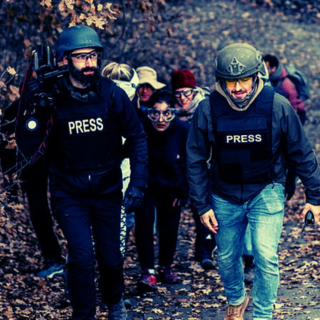
A checkpoint goes wrong faster than most people expect. One minute you are answering routine questions. The next, a weapon is visible, the mood shifts, and everyone in the vehicle starts making decisions that carry real consequences. HEAT training for conflict zones exists for that moment – and for the dozens of smaller decisions that shape whether a deployment stays controlled or starts to unravel.
For journalists, humanitarian staff, NGO teams, institutional personnel, and private sector professionals operating in high-risk areas, the point of training is not to create false confidence. It is to build judgment under pressure. Good preparation helps people recognize hazards early, manage exposure, communicate clearly, and respond in a way that protects both the individual and the mission. HEAT training for conflict zones exists precisely for these moments.
Why HEAT training for conflict zones matters before deployment
The biggest misconception is that experience alone is enough. Field experience matters, but unmanaged experience can reinforce bad habits as easily as good ones. Training gives structure to decision-making. It provides a common language for teams, a baseline for organizations meeting duty-of-care obligations, and a practical framework for people who may be entering unstable environments for the first time.
That matters because hostile environments rarely present one clean, obvious threat. Risk tends to stack. Civil unrest can disrupt medical access. A routine movement can become more dangerous because of fatigue, poor route planning, or weak communications. A crowd incident can escalate because one person reacts emotionally at the wrong time. Training should prepare participants for complexity, not just isolated scenarios.
There is also a psychological benefit that should not be underestimated. People perform better when they have rehearsed stress responses. They are more likely to slow down, observe clearly, and avoid impulsive actions. That does not remove fear, nor should it. It makes fear more manageable.
What effective HEAT training for conflict zones includes
The strongest programs are practical, scenario-based, and built around the realities of field deployment. They do not rely on generic classroom theory. They expose participants to decision points that feel uncomfortable, time-sensitive, and imperfect – because that is what real incidents look like.
Situational awareness and movement planning
This is the foundation. Participants need to understand how to read an environment before trouble becomes visible. That includes route selection, identifying choke points, assessing the behavior of security forces or armed actors, recognizing unusual patterns, and understanding how local political dynamics affect movement.
Just as important is learning how to travel with purpose. A team that knows where it is going, why it is going, what the fallback options are, and how to communicate changes is far less vulnerable than a team improvising on the move. Good training turns movement planning into a discipline rather than an afterthought.
Trauma care in austere conditions
Medical support in conflict-affected areas may be delayed, degraded, or absent. That is why emergency care is a core training component, not an optional extra. Participants should know how to control severe bleeding, manage airway risks, address trauma injuries, and stabilize a casualty until evacuation becomes possible.
The standard should be practical competence, not medical theater. People do not need to become clinicians. They do need to function when stress is high, resources are limited, and minutes matter.
Weapons, explosives, and emerging threats
Many civilians working in conflict environments are not trained to recognize weapon effects, explosive hazards, or the indicators of an imminent attack. That gap is dangerous. Effective training gives participants a grounded understanding of small arms threats, fragmentation risks, unexploded ordnance, and the basics of cover versus concealment.
It should also reflect the current threat picture. In some areas, drones are now part of the operating environment, affecting movement, visibility, and exposure. A training program that ignores evolving risks is already behind.
Protest, civil unrest, and crowd behavior
Not every hostile environment is an active war zone. Political unrest, riots, strikes, and sudden crowd violence can place field personnel in serious danger even where front lines do not exist. Participants need to understand crowd dynamics, safe positioning, withdrawal cues, and what actions can unintentionally escalate attention.
This is especially relevant for journalists and NGO personnel who may need to work near demonstrations without becoming trapped inside them. The right response is rarely dramatic. It is usually about early recognition, disciplined distance, and timely exit.
Kidnap prevention and survival
Kidnapping is a low-frequency but high-impact risk in some environments. Serious training addresses both prevention and survival. Prevention includes route discipline, profile management, accommodation security, and reducing predictability. Survival training should focus on practical behavioral guidance for the immediate capture phase and the longer period of confinement.
This is an area where unrealistic training can do real harm. No provider can script every outcome, and there are no universal guarantees. What good instruction can do is improve mental readiness, reduce avoidable mistakes, and give participants a framework for surviving an event that is chaotic by nature.
Stress, resilience, and decision-making under pressure
Performance drops when fatigue, fear, confusion, and sensory overload set in. That is not a personal failing. It is a human response. Training should therefore include stress exposure and resilience techniques that help participants retain function when the environment is deteriorating.
This is not about motivational language. It is about breathing control, communication discipline, team roles, and preserving judgment when information is incomplete. In practice, resilience is operational.
This is the standard that separates genuine HEAT training for conflict zones from a checkbox course.
Not all hostile environment programs are equal. Some are designed to satisfy procurement requirements with minimal disruption. Others are built to prepare people for the field. The difference shows quickly.
A credible course is led by instructors who understand operational reality, not just theory. That means people who have worked in journalism, humanitarian response, medical support, security, or similar frontline roles. They know where classroom advice breaks down and what participants are likely to face in real deployments.
Realism also matters, but it needs to be purposeful. Noise, role players, simulated checkpoints, casualty scenarios, and time pressure are useful only when tied to clear learning outcomes. Training should challenge participants without turning serious subject matter into performance.
The best courses are also cross-sector aware. A freelance journalist, an NGO field coordinator, and a corporate security manager may share exposure to unrest or armed violence, but their tasks, constraints, and legal responsibilities differ. Strong instruction recognizes those differences while still building shared core skills.
Who needs HEAT training for conflict zones and when
HEAT training for conflict zones is not reserved for war correspondents. It is relevant for anyone whose work places them in unstable political environments, conflict-affected regions, or areas where state protection cannot be assumed. That includes media teams, aid personnel, election observers, diplomatic staff, investigators, and institutional or corporate personnel with field exposure. HEAT training for conflict zones is relevant for anyone whose work places them in unstable environments.
Timing matters. The best point to train is before deployment, not after a travel notice raises concern or after an incident has already exposed a weakness. Refresher training is equally important, especially for professionals returning to the field after time away or moving into regions with different threat patterns.
Organizations should think beyond individual enrollment. If a team deploys together, trains together, and uses the same reporting and emergency procedures, performance improves. Shared rehearsal reduces confusion when pressure hits.
How to judge whether a course is right for your team
Start with relevance. The curriculum should match the environments your people actually enter. If your staff work around civil unrest, checkpoints, and indirect fire risk, they need more than a generic travel safety briefing. When evaluating providers, look for HEAT training for conflict zones that combines field-informed instruction with realistic scenario exercises.
Next, look at delivery. A four-day immersive format often produces stronger retention than compressed awareness sessions because it gives participants time to practice, make mistakes, and improve. Scenario-based training, especially when it includes medical response and behavioral decision-making, is usually more valuable than lecture-heavy instruction.
Then consider credibility and duty of care. A course should help your organization demonstrate that preparation is serious, documented, and aligned with real deployment needs. For many institutions, that is not only a risk management issue. It is part of professional responsibility.
Providers such as Bluespear have built programs around that standard, combining field-informed instruction with realistic exercises designed for journalists, aid workers, and other professionals who may need to operate under genuine pressure.
The right HEAT training for conflict zones does not promise control over conflict. No course can do that. What it can do is make people harder to surprise, better able to act, and more capable of protecting themselves and others when the margin for error gets small. That is the standard worth training for before the next deployment is on the calendar.
